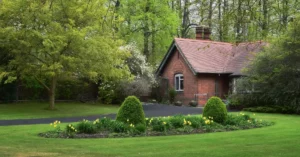
The honest answer is that a well kept, low maintenance garden with a sharp lawn, clean edges and a tidy front add more to a Kildare sale than any elaborate feature ever will. Buyers decide how they feel about a house in the first few seconds, usually before they’ve even gone through the front door, and an overgrown bed or a straggly lawn edge undoes a lot of good work done inside. You don’t need a redesign to shift that impression. You need the basics done properly and consistently.
What actually moves the needle for buyers
We work gardens all over Naas, Newbridge, Celbridge, Maynooth, Leixlip, Athy, Clane and Kilcock, and the pattern is the same regardless of the estate or the price bracket. Buyers don’t walk round totting up the value of your patio stone or your raised beds. They form an impression in the first glance from the footpath, and that impression is almost entirely about tidiness, not design. A lawn with crisp edges, borders that are clearly maintained, and no bindweed or dandelions creeping through the gravel says “this house has been looked after.” That reads straight through to how they’ll feel about the roof, the boiler and everything else they can’t see.
We’d put more value, pound for pound, into getting the garden genuinely tidy than into adding a feature. A new deck or an ornamental tree looks great in a listing photo, but if the lawn edges are ragged and the beds are full of weeds, it undercuts the whole picture. Get the fundamentals sharp first.
The front garden works harder than people realise
In a lot of Kildare estates, especially the older developments around Naas and Newbridge, the front garden has been quietly repurposed for parking over the years, and that’s fine, but it still needs to look deliberate rather than neglected. A cracked path, moss creeping across paving, or a strip of grass nobody’s bothered mowing properly does more damage to a first impression than most people expect. If you’re planning to sell within the next year or two, this is the area we’d prioritise, because it’s what every single viewer sees before anything else.
If you’re adding hard surfacing, a dropped kerb, or anything that changes access from the road, it’s worth checking with Kildare County Council whether planning permission or a road opening licence applies before you start. Rules here can be specific to the road classification and the estate, so don’t assume based on what a neighbour did.
Low maintenance beats elaborate, almost every time
We’d steer most sellers away from anything high maintenance right before a sale. A pond, an intricate rockery, or a large bed of perennials that needs constant attention can actually put buyers off, because they see ongoing work rather than a finished garden. What sells is a garden that looks like it takes care of itself: solid lawn, clean lines, structural planting (box, hebe, low shrubs) that doesn’t demand weekly fuss. If you’ve got an elaborate bed that’s gone a bit wild, our honest advice is to simplify it down rather than try to dress it up before viewings start.
The small details buyers notice (and valuers sometimes don’t)
A sharp line between lawn and bed does more for how “finished” a garden looks than almost anything else, and it’s one of the quickest jobs to get right. Our lawn edging work is often the last thing we do before a client puts a house on the market, because it makes the whole garden read as deliberate rather than left alone. Pair that with a lawn that’s been properly mowed on a regular cycle (our lawn mowing service keeps that consistent through the growing season) and a feed to green it up if it’s gone patchy or yellow, which is where lawn fertilisation earns its keep in the weeks before viewings.
Weeds are the other giveaway. Dandelions through gravel, bindweed up a fence, nettles in a corner bed, these are small things individually but they add up to a garden that looks unmanaged, and buyers notice unmanaged gardens even if they can’t say exactly why. Our hand weeding service is one of the most requested jobs we do in the run up to a sale, precisely because it’s the kind of thing a seller keeps meaning to get to and never does.
What pushes the cost of garden prep up or down
- Size and current condition: a garden that’s been neglected for a season or two takes considerably longer to bring back than one that’s just had a few weeks of inattention.
- Access: gardens with narrow side access or no rear vehicle access take longer for skip removal and material delivery, which adds to the job.
- Hard landscaping vs. soft landscaping: tidying lawns, beds and edges is relatively quick work; adding or repairing patios, walls or paths costs considerably more and takes longer to organise.
- Weed type: established perennial weeds like bindweed or Japanese knotweed need a different approach entirely, and that should be flagged early rather than discovered on the day.
- How far out from sale you start: doing the work eight to ten weeks before listing gives lawns and new planting time to settle and look established. Last minute jobs the week before viewings are more limited in what they can achieve.
Because every garden and every brief is different, we don’t quote a number here. The fairest way to find out what your job will actually cost is to get in touch through our contact page with a few photos and a rough timeline for your sale.
Timing it right before you list
We’d generally recommend starting garden prep six to ten weeks before you expect viewings to begin, longer if the lawn needs recovery from bare patches or moss, which is common enough on the heavier clay soils around parts of Kildare after a wet winter. Starting too late means the grass hasn’t had time to green up properly after a feed, and any new planting still looks raw in photos. Starting early also gives you room to deal with anything unexpected, like a drainage issue in a corner of the lawn that only shows up once you start working the ground.
We’ve spent years working gardens across Naas and the wider county, and we’ve seen first hand which jobs actually shift a buyer’s impression and which ones are just nice to have. If you’re planning to sell in the next few months and want an honest read on what your garden needs, get in touch through our contact page or have a look at our about us page to see more of what we cover. We’re happy to call out and give you a straight opinion, even if that opinion is “you don’t need much done at all.”
Frequently Asked Questions
Does landscaping actually add value to a house, or is it just kerb appeal?
It’s mostly about perception rather than measurable value added, but perception is exactly what influences a buyer’s first offer. A tidy, well presented garden doesn’t usually add a fixed amount to a valuation, but it can speed up a sale and reduce the chance of a buyer using a scruffy garden as a reason to negotiate the price down.
Should I spend money on a new patio or deck before selling?
Generally we’d say no, not purely for resale. Hard landscaping is expensive, takes time to complete properly, and buyers rarely pay back the full cost in their offer. You’re usually better putting that budget into tidying the lawn, edges and beds, which has a much quicker and more visible impact for a lot less outlay.
How far before I list my house should I get the garden sorted?
Six to ten weeks is a reasonable window for most gardens, longer if the lawn needs real recovery work. That gives grass time to green up after feeding and any new planting time to settle in and look established rather than freshly put in.
What’s the single biggest garden mistake sellers make in Kildare?
Letting the front garden slide while focusing all their effort indoors. Buyers form an opinion before they reach the front door, and a scruffy edge, mossy path or patchy lawn undoes a lot of the good impression created inside the house.
Do I need planning permission to change my front garden before selling?
It depends on what you’re changing, particularly around parking, dropped kerbs or altering access from the road. Rules vary by estate and road classification, so check directly with Kildare County Council before carrying out any work that changes access or hard surfacing at the front.
Can you help with just the small tidy up jobs, not a full redesign?
Yes, that’s actually the most common request we get before a sale. Most of our pre-sale work is lawn mowing, edging, feeding and hand weeding rather than full redesigns, because those are the jobs that make the biggest visible difference for the least disruption.