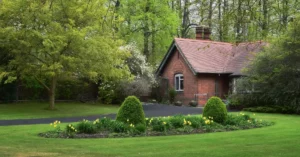
If you’re thinking about getting your garden sorted for spring 2027, the honest answer is to start looking now, not in March. The jobs that make the biggest difference to how a Kildare garden looks come April and May, things like clearing weeds out of beds, resetting lawn edges and getting that first feed down, are all best done in the dormant months while the ground is workable and before everything greens up and goes mad.
We say this every year and most people still call us in the third week of March wondering why we’re booked out for a fortnight. Spring is our busiest stretch by a long shot, and once the daffodils are up every landscaper in Kildare is flat out. Get on a list now and you’ll actually get the work done before the growing season starts, rather than fighting it after the fact.
Why Booking Now Beats Waiting Until March
There’s a pattern we see every single year across Naas, Newbridge and Celbridge. Gardens get ignored right through the back end of the year, then the first mild, dry weekend in March hits and everyone suddenly wants their garden looking well. The trouble is, by then the weeds have already had a head start, the grass is growing fast enough that mowing can’t keep pace, and every landscaping outfit in the county has a backlog.
Doing the groundwork in November, December and January means you’re working with the garden rather than against it. Beds are easier to clear when there’s less foliage in the way. Lawns can be edged and tidied while growth is slow. And if you book early, the work gets fitted in on a schedule that suits you, not squeezed in between a dozen other spring jobs.
What We’re Actually Doing in Kildare Gardens Right Now
The gardens we work on across Kildare fall into two rough camps. There are the older estates around Naas and Newbridge with heavier clay soil, where winter wet sits on the surface and compacts if you walk it too much, and there are the newer builds out towards Celbridge, Maynooth and Leixlip where the topsoil laid down by the developer is often thin and poor, and the lawn struggles no matter what you do to it. Both need different handling.
On the clay gardens, our focus in winter is staying off the lawn as much as possible and getting bed and border work done instead, since that’s where the real damage from waterlogging happens if machinery or heavy foot traffic gets onto it. On the newer estates with thin topsoil, we’re often looking at what the lawn actually needs by way of feeding once spring arrives, because a lawn with poor soil underneath needs more help to green up properly than an established one.
The Weeding Window: Why Winter Beds Need Attention Before Spring Growth
This is the one job homeowners underestimate most. Perennial weeds like dandelion, dock and bindweed don’t die off over winter, they just go quiet, and their root systems are sitting there ready to explode the moment the soil warms up. Clear them out now, while you can actually see what you’re dealing with against bare soil, and you’re dealing with a fraction of the problem come April.
Leave it until spring and you’re trying to weed a bed that’s also full of bulbs coming up, perennials breaking dormancy and self-seeded annuals all tangled together. It’s slower, it’s messier, and it’s far easier to damage the plants you actually want. We do a lot of hand weeding through the winter months for exactly this reason, it’s the single best thing you can do now to make spring easier on yourself.
Lawn Edging and Why It Matters Before the Grass Takes Off
A lawn with crisp, well-defined edges looks twice as tidy as one without, even if the grass itself hasn’t had its first cut yet. Getting lawn edging done now, while growth is slow, means those lines hold their shape well into spring rather than blurring out within a few weeks of the grass taking off. It also makes the first few mows of the season far easier, since there’s a clean line to work to instead of grass spilling into beds and paths.
Getting the Lawn Ready: Mowing Height and the First Feed
One mistake we see constantly in Kildare gardens is the first spring feed going down too early or too late, either wasted on ground that’s still too cold for the grass to use it, or applied so late the lawn’s already stressed from its first flush of growth with nothing to support it. Timing this properly depends on soil temperature and ground conditions as much as the calendar date, which is part of why it’s worth getting a professional eye on it rather than guessing from a bag of feed in the garden centre.
It’s also worth thinking ahead about who’s doing your lawn mowing through the season and getting that lawn fertilisation plan sorted before spring, rather than scrambling to arrange it once the grass is already growing fast and every landscaper’s diary is full.
What Pushes the Cost Up or Down
We never quote a figure without seeing the garden, because the range on these jobs is genuinely wide. A few things that move the number either way:
- How long the beds have been left unweeded. A garden neglected for two or three seasons takes considerably longer to clear than one that’s had light maintenance.
- Access. Gardens with narrow side passages or no rear access for equipment take longer and need more manual work.
- Soil type. Heavier clay around Naas and Newbridge is slower and harder going than the lighter ground you’ll find in parts of Kildare further from the Liffey basin.
- Size and layout of beds versus lawn. Lots of small beds and borders generally take more labour than one or two large open ones.
- Whether it’s a one-off tidy up or you’re setting up a regular maintenance schedule through the year, which usually works out better value over the season.
The honest way to get an accurate number is to have someone walk the garden with you. Get in touch through our contact page and we’ll give you a straight quote for your own garden, not a generic one pulled from a price list.
Book Early and Avoid the Spring Rush
We’ve spent years working gardens all across Naas, Newbridge, Celbridge, Maynooth, Leixlip, Clane, Athy and Kilcock, and the one piece of advice we’d give every Kildare homeowner is the same: don’t wait for the first sunny weekend in spring to think about your garden. By then we’re already stretched thin. If you want your garden genuinely ready rather than scrambling to catch up, reach out to Naas Landscaping through our contact us page now and we’ll get you booked in before the rush starts.
Frequently Asked Questions
When should I actually book spring garden work in Kildare?
Ideally from November through January, while the ground is workable and before growth picks up. Landscapers across the county fill their spring diaries fast once the weather turns in March, so booking early gets you a proper slot rather than a rushed one.
Is it worth weeding a garden in winter if nothing is growing?
Yes, and it’s actually one of the best times to do it. Perennial weed roots are still alive under the soil even though the top growth has died back, and clearing them now stops them getting a head start when spring warmth arrives.
Will lawn edging done in winter last until spring?
Edges cut while growth is slow tend to hold their shape for several weeks longer than edges cut during active growing months, simply because the grass isn’t pushing out as fast. It won’t last forever, but it buys you a tidy looking lawn well into the new season.
My garden has heavy clay soil, does that change the timing?
It does. Clay ground around Naas and Newbridge holds water through winter and compacts easily if walked on while wet, so we tend to prioritise bed and border work during the wettest months and leave lawn-specific tasks until conditions dry out a bit.
Do I need planning permission for garden landscaping work?
Most routine landscaping, like bed clearing, edging, fencing repairs and planting, doesn’t need planning permission, but larger structural changes or boundary alterations sometimes do. If you’re planning anything significant, it’s worth checking the current position with Kildare County Council before work starts.
How do I get an accurate quote without a set price list?
The most reliable way is to have someone come and look at the actual garden, since soil type, access and how overgrown the beds are all change the time involved. Contact Naas Landscaping through our website and we’ll arrange a proper look and a straight quote for your garden.